

Running an online store today means you’re competing with brands that have full teams, bigger budgets, and ads everywhere. That doesn’t mean you can’t win; it just means you can’t wing it.
The right eCommerce digital marketing agency helps you put things in the right order: get the store working, drive the right traffic, and then turn those new customers into repeat buyers. And no, it doesn’t have to be complicated or filled with jargon.
A good digital marketing agency should be able to explain what they’re doing, why they’re doing it, and how it connects to sales. This guide walks you through the moves that move revenue for eCommerce brands.
1. Start With the Store, Not the Ads
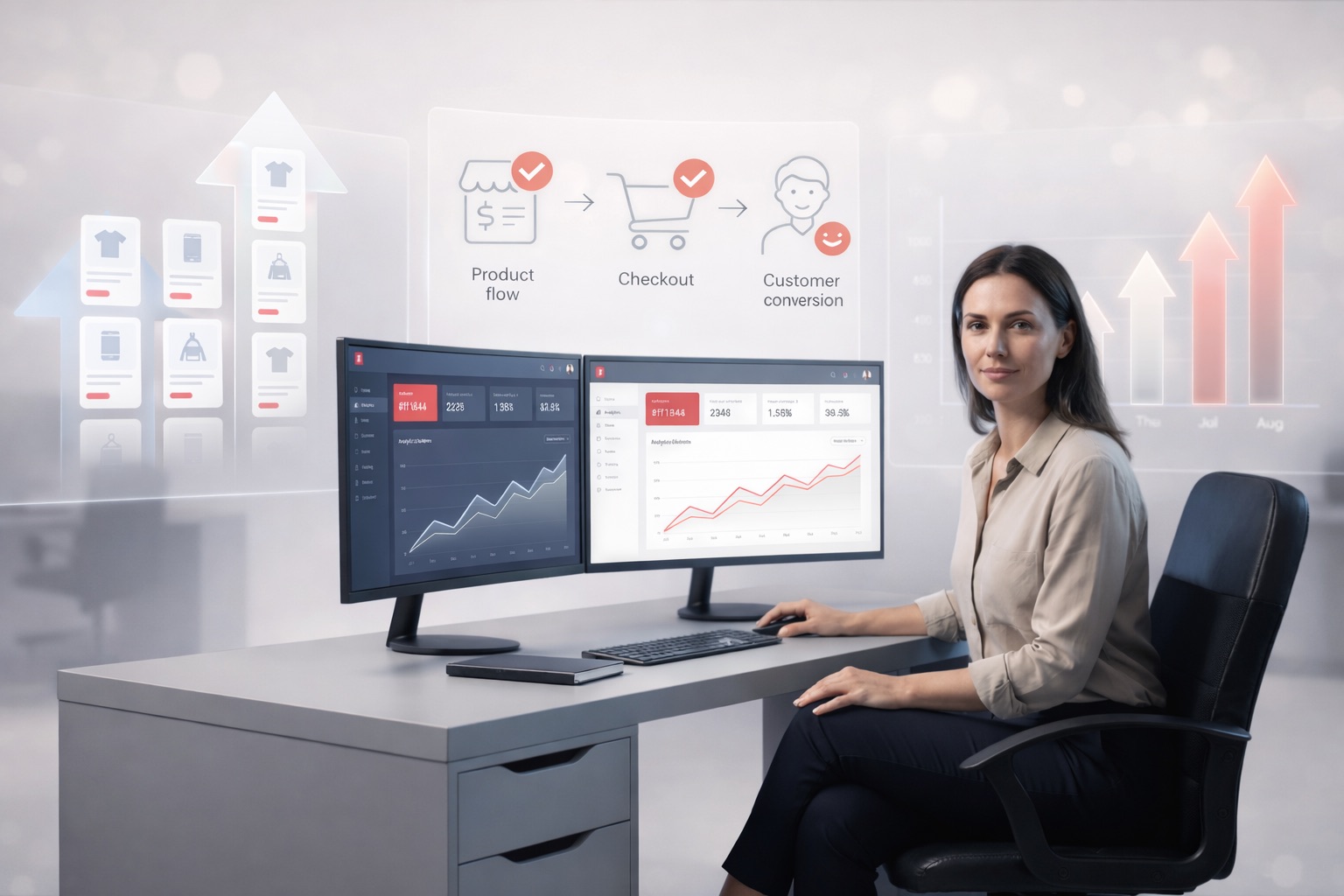
Before you spend a single dollar on advertising, make sure your store is ready to convert. Even the top eCommerce marketing agency can’t make up for a confusing layout or slow checkout. Ads bring people in; your website has to convince them to stay.
Walk through your own site like a first-time visitor. Is the homepage clear? Does it load fast on a phone? Can you find shipping details or return info without hunting? These simple checks make a huge difference in conversion rate optimization and your overall marketing performance.
If visitors are landing but not buying, stop adding more traffic. Fix the experience first. Once your business is ready to handle customers smoothly, ads, email marketing, and SEO services will start driving real results instead of wasted clicks.
2. Show Up Where Shoppers Are Already Looking
Before you run bigger campaigns, make it easy for people to find your products. A good eCommerce marketing agency will always start here, because it’s the part of marketing that pays off month after month.
- Search first. Clean product titles, helpful descriptions, and organized collections make it easier for search engine optimization to work. If Google can understand your products, shoppers can too.
- Local matters if you sell in person. Keep your Google Business Profile, hours, and key listings updated so nearby buyers can see that you have the item in stock now.
- Answer buying questions on your site. Short guides like “how it fits,” “how to care for it,” or “best gifts under $50” help shoppers decide faster, and they give you extra content to share on social and email.
This is the quiet part of an eCommerce marketing strategy, but it’s what separates brands that get steady organic traffic from brands that have to rely on ads for every sale.
3. Use Ads for Momentum
Ads should speed up what’s already working in your store and not replace a weak offer or a confusing checkout.
- Start with search and shopping ads. These target people already looking for what you sell, so they’re more likely to buy right away. That’s smarter than blasting broad social ads with no intent.
- Retarget shoppers who didn’t finish. If someone viewed a product or added it to the cart and left, show them the item again. Retargeting is one of the easiest ways to recover sales for an eCommerce business.
- Watch ROAS every week. Keep an eye on return on ad spend and pause ads that aren’t paying off. Paid media works best when you keep fine-tuning audiences, ad creative, and landing pages.
A digital marketing agency uses search engine marketing and paid advertising as a lever to drive revenue faster.
4. Turn First-Time Buyers Into Repeat Buyers
Getting the first sale is only the start. The real growth for any eCommerce business comes from customers who come back again and again.
- Automate your follow-ups. Every order should trigger a short, smart email flow: confirmation, shipping, review request, and a gentle “you might also like” follow-up.
- Segment your list. Recommend products based on what customers have already bought. Relevance builds trust and loyalty.
- Use SMS sparingly but strategically. Text messages are great for time-sensitive offers like limited drops, low inventory alerts, or seasonal sales.
These simple steps help your eCommerce agency turn one-time shoppers into brand fans who do repeat purchases and drive long-term, sustainable growth without constant ad spend.
5. Make Social Do More Than “Be Visible”

Social media can do far more than just keep your brand in the feed—it can drive actual sales when done with intention.
- Post with purpose. Focus on content that helps people shop: new arrivals, styling ideas, gift inspiration, and real customer photos. Every post should give someone a reason to click.
- Mix formats to match intent. Reels or short videos help your ecommerce business reach new audiences, while Stories and tagged links create urgency for followers who already know you.
- Encourage user-generated content (UGC). Ask happy customers to tag your products when their order arrives. It builds credibility and gives you fresh content without a huge production budget.
When used strategically, social media marketing becomes part of your ecommerce marketing strategy—not just something to “keep up with,” but a channel that strengthens customer connections and drives real results.
6. Track What Matters for eCommerce
More data doesn’t always mean better decisions. Focus on the few numbers that show how your store performs day to day.
- Watch your four key metrics: traffic, add-to-cart rate, checkout completion rate, and repeat purchase rate. These tell you if people are finding, liking, and trusting your store enough to buy again.
- Diagnose with intent. If traffic is strong but few people add to the cart, the issue is usually product presentation or pricing. If add-to-carts are good but checkouts drop, check your shipping costs, payment options, or trust signals (like reviews and returns).
- Look at trends, not days. Real improvement shows up over weeks when you test, adjust, and track how each change affects conversions.
The best ecommerce marketing companies use this kind of performance marketing mindset to identify what’s holding back sales, then fix it with clear, data-driven updates that move the needle.
7. Plan Around Seasons and Launches
Strong eCommerce marketing is staying a few steps ahead.
- Map your key sales windows. Note major retail moments like Valentine’s Day, Mother’s Day, back-to-school, and Q4 holidays. Every business has its own rhythm—learn yours and plan around it.
- Prep early. Get creative assets, email drafts, and ad campaigns ready 2–4 weeks in advance. That gives you time to test links, track results, and avoid last-minute chaos.
- Have a backup promo. Keep one “evergreen” offer, like free shipping or a bestsellers bundle, ready to roll for slower weeks or inventory gaps.
This approach keeps your marketing calendar balanced and your team calm, for consistent digital marketing solutions that drive sales all year.
8. Work With an Agency Like It’s a Team, Not a Vendor
The best results come when your marketing agency knows your business almost as well as you do.
- Share the real details. Be open about margins, inventory levels, and your best-performing products. Your marketing agency can only build strong campaigns if it understands what drives your revenue.
- Ask for reports. You don’t need a spreadsheet full of jargon; just clear answers: what we ran, what it earned, and what’s next.
- Embrace testing. Strong campaigns are built on iteration. Expect your agency to test headlines, visuals, landing pages, and audiences, then refine based on what converts.
When you treat your agency like a strategic partner, not just a vendor, you get marketing that aligns with your goals and builds long-term, sustainable growth.
9. Know When to Level Up
There’s a point where doing it all yourself stops working. If you’ve maxed out DIY ads, you’re tired of making every social post, and sales still feel unpredictable, that’s your signal.
- You’ve hit a ceiling on DIY ads. Your Google Ads or paid social are bringing in traffic, but you can’t squeeze more out of them without better targeting, ad creative, or landing pages.
- You can’t keep up with content. Product drops, emails, reels, blogs—ecommerce brands need a steady drumbeat. If you can’t maintain it, growth stalls.
- You want steady revenue, not lucky weeks. Moving from “we sold a lot this weekend” to “we sell this much every month” usually takes help.
That’s when bringing in an eCommerce-focused digital marketing agency makes sense, so you can keep scaling sales and strengthen your brand without burning out your team.
Sell More without Working More
If your store is getting visitors but not enough orders, or if you’re tired of chasing every new marketing idea on your own, it’s time to bring in people who live and breathe eCommerce. Epic is the eCommerce digital marketing agency that starts with your products, your platform, and your numbers, and then builds a plan you can maintain.
We can help you tighten up your site, clean up SEO, run ads that pay for themselves, and set up email flows that turn first-time buyers into repeat customers.
Book a free consult with Epic and let’s see what it would take to make your store grow on purpose, not by accident.
Frequently Asked Questions
What does an eCommerce marketing agency actually do for a small online store?
It helps you get the right traffic (SEO, Google Ads, social), improve product pages, and set up emails so visitors turn into customers and come back again.
How do I know if a marketing agency is right for my eCommerce business?
Look for one that asks about your products, margins, and platform first. The best ecommerce marketing agencies don’t pitch random services—they build around how you sell.
Do I really need conversion rate optimization if I’m already getting traffic?
Yes. If people visit but don’t buy, CRO is what fixes that. For example, better images, clearer copy, trust badges, and faster checkout.
What’s the difference between regular SEO and eCommerce SEO?
Ecommerce SEO focuses on products, categories, site structure, and internal search—so shoppers can find items fast. It’s built for stores, not blogs.